‘Fierce Invalids Home From Hot Climates’ and How I Survived Three Days Alone in the Wilderness
25 years after its release, Tom Robbins’ penultimate novel remains a delightfully controversial whirlwind, a love letter to the versatility of language, and a wellspring of sanity in fraught times

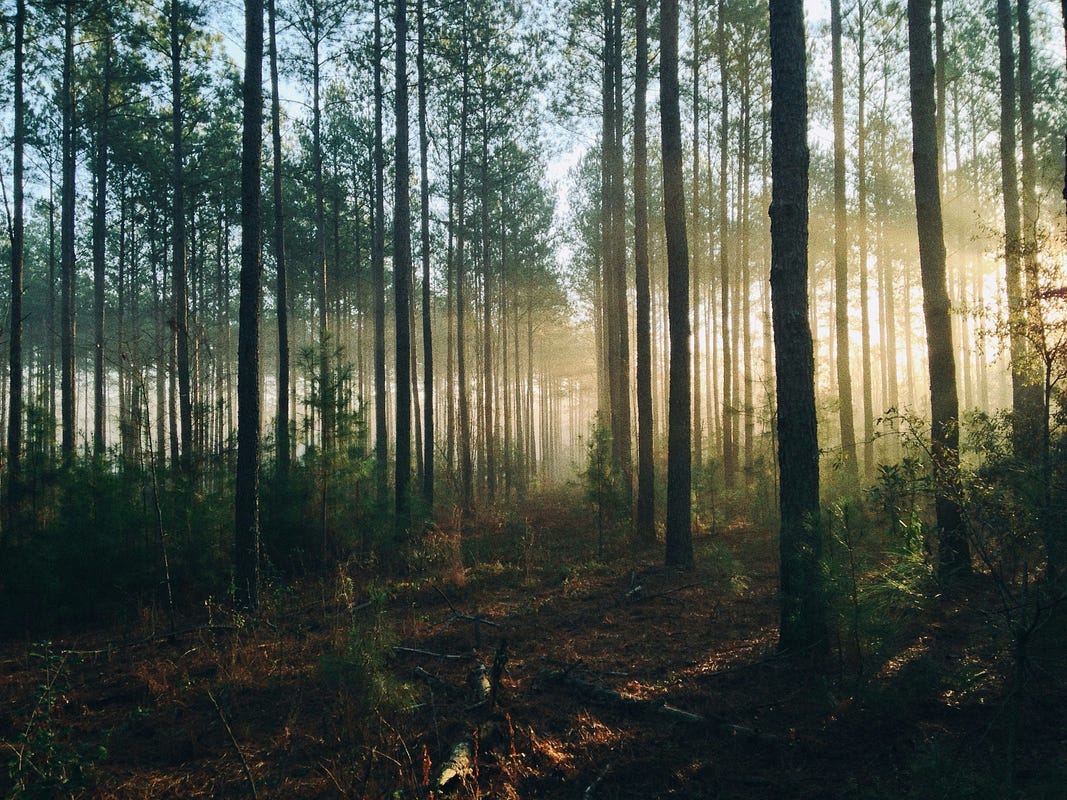
It’s safe to say that Fierce Invalids Home From Hot Climates entered my life under fateful circumstances. As a fresh college drop-out, the book served as the only friend I had during a 72-hour period of isolation in the heart of the Shenandoah Valley. Sans even a cellphone, and with only a shoddy pair of tarps for shelter, I quickly came to terms with the fact that my damp, beige-covered book would be my only ally in my battle against time and the elements. But how exactly I found myself biding hours in the wilderness of Virginia — with no more than a paperback novel, a whistle, and a loose tree limb to fend off whatever bears, wolves, foxes, coyotes, or dusky-footed woodrats were out there with me — may demand a fair bit of context.
Going away to rehab often comes paired with specific images. People envision tense car rides, protracted periods of silence, verbal arguments turned violent, and horrible drug withdrawals. They picture the bonds between families in tatters — teenagers hauled away from homes kicking, screaming, clawing, and pleading. The primary image that the word “rehab” had conjured for me beforehand was of an inescapable asylum atop a hill — bars on its windows, ill-fitting sweatsuits and ward socks on its residents. Of boiling storm clouds and intermittent cracks of lightning grimly framing the ironclad fortress.
But as my father and I arrived at our destination in the Middle American community of Midlothian, Virginia, those preconceptions couldn’t have been further from the reality suddenly facing me.
I was going away to rehab for my marijuana use, yes, but even while my father recognized that I was addicted to weed, and could more than likely stand to gain something from rehabilitation, he had no illusions about the kinds of addictions that required people to be shipped away and institutionalized. He recognized that I wasn’t a cocaine or heroin addict, that I’d never abused a bottle of pills, and that I knew better than to ever do something dumb like buy a first pack of cigarettes. Nicotine and hard drugs were never problems for me.
I’d quenched my curiosity for alcohol shortly after I hit jr. high and it never interested me much beyond that. Even after going off to one of the most boisterously beer-binging universities on the East Coast, I never developed a taste for the substance or the sensation it occasioned. The altered states and drunken stupors I watched people descend into when the weekend rolled around never offered very cogent arguments for the drug.
The idea of rehab stemmed more from a sense of legal obligation than my family’s desire to see me finally break free from marijuana’s clutches. Despite going to a college so infamous for its frat life excesses, hazing, and alcohol-related deaths — a school cynically (and sometimes boastfully) referred to by its students as “Boozeberg” — my housing was taken from me before I even finished the first semester of my freshman year. It was over the simple infraction of smoking weed with a woman from my English class.
As beef-headed fraternities forced pledges to do push-ups on broken glass, sexual assault allegations accumulated, and administrators did their best to look the other way, I fought three separate felony charges over a substance that was already decriminalized in my home city, and would be medically legal across the entire state a mere eight months later.
The lawyer my family hired to help me untangle the legal turmoil believed we could convince my judge I was sufficiently repentant if there were rehabilitation efforts we could point toward. So my parents and I reasoned that, if rehab was what was on the menu, we might as well pick the most interesting one.
After a healthy amount of digging, up popped the “Blackwater Outdoor Experience.” And within a few weeks, I dropped my classes, packed my instructed week’s worth of clothes into a bag, and embarked on a month-long mission that was poised to leave me smellier than a pair of post-apocalyptic gym socks.
Arriving in Midlothian on that chilly October morning, I noticed a few blankets strewn across the dew-silvered grass of a small triangular lawn. It was bathed in the sinewy shadow of a modest tree overhead and beside a slim building. The lean structure’s front door was atop a stoop and beneath an awning, and the six stairs leading to it were comprised of red bricks. Synthetic white paneling shaded the building’s exterior, while the surrounding greenery set against it tried its best to deny the frigid pull of an impending winter.
I wrestled with a mixture of anxiety, exhaustion, and crushing resistance as I willed myself free from the passenger seat. A woman with brown hair, a round face, and cerulean blue eyes kindly greeted me as I emerged from the car. She shepherded me toward one of the blankets after a perfunctory exchange of pleasantries.
The woman introduced herself as April, and her bright and chipper demeanor immediately began to dissolve the worst of my doubts. She would be serving as our “field guide.” I was unsure what the trial ahead might entail, and unlike going away to Bloomsburg a few months prior, I didn’t even have the luxury of stereotypes to turn toward for guidance. There’s no shortage of movies about the fraught years of college. But there’s a criminal dearth of films depicting the “drop out of school, forfeit your iPhone, and venture off into the wilderness with a bunch of drug-addicted strangers” avenue.
April was nearly ten years my senior, and had nearly twenty years worth of adventure stuffed into that additional decade to prove it. There was an undeniable ruggedness to her, but no amount of life spent in the intrepid outlands of Alaska had drained the warmth, verve, or optimism from her face.
April genially instructed that I place all of my belongings on the grass-stained blanket and I complied. My dad enthusiastically peppered her with questions as I unloaded items from my bag. Unlike the other guardians dropping their kids off in that unassuming suburban parking lot, my dad did so with the very same attitude he had a few months earlier when dropping me off at college for the first time. He was a father seeing his son off into the world, thrilled to hear about whatever adventures I’d have to report once I emerged on the other side.
The parents of my less punctual peers wore eyes of resignation as they dropped their children off. Aged by the heroin, cocaine, and pharmaceutical addictions of their separate sons, by all of their separate rehab stints and all of the unfulfilled hopes that “this time would be different,” they could hardly muster an ounce of enthusiasm for what this more new-aged modality might have in store.
There was nothing authoritative about April’s request to empty my bag, so I launched into action with hardly a second thought. If there was an ulterior motive behind the appeal, her reassuring glow concealed it.
But as she began combing through my contents, I was jarringly reminded that wilderness rehab wouldn’t magically be sunshine and roses just because we were unshackled inside some cramped and windowless institution. The reason she instructed me to put everything on the blanket was so that she could search me and confirm I wasn’t attempting to smuggle any drugs on our trip. She was to look for lighters or baggies or secret pockets with pills inside them.
My dad continued battering April with questions as she cursorily rifled through pants and sweatshirts, flashlights and mosquito repellents, water bottles, band-aids, and boots. She tried her best to walk the balance beam between courteous conversationalist and dutiful enforcer. She looked tasked — mildly bothered, even — but remained buoyant. Whatever annoyance she held over his steady line of inquiries was lost in her luminous composure.
Fellow addicts continued to sullenly file onto the facility’s lawn. We exchanged meek and fleeting glances, but no one wanted to be the first to introduce themselves to the rest of the tortured intake pool.
Whether it was my dad’s aggressively amicable interrogations hijacking her attention, the Herculean task of comprehensively sorting through the multiplying mounds of belongings laid out in front of her, or that she simply hadn’t been briefed on the fact that even books would be forbidden on our quest, I can’t be sure. But as luck would have it, a copy of Fierce Invalids Home From Hot Climates survived April’s search and seizure.
Throughout our first weeks in the wilderness, I didn’t have the urge to open the book even once. Each day’s escapades left me too exhausted to feel like propping up a flashlight in my ramshackle tent and sifting through pages. But as weeks wore on, April and our “field therapist,” Jon, began tempering us for the sobering period of seclusion awaiting us ahead. And I began silently devising my battle plan.
Apparently, among the most core components of this whole rehab experience was a notorious three days of solitude. We’d each be guided to designated plots of land in the middle of the forest, entire miles apart from one another — from the friends and counselors we’d spent the past few weeks living beside.
The period of independence was presumably meant to spur reflection and repentance. The adult equivalent of a timeout, but where minutes are replaced by days and sealed doors subsumed by sprawling forest. Yet where even prisoners are often granted computers and libraries, we were expected to subsist for three full days without so much as an MP3 player, book, or a pathetic calculator game. Fortunately, April’s shoddy search ensured my loneliness wouldn’t be too crushing. That my mental spirals could be contained — if not at least curbed or channeled through — the companionship of that book my father nonchalantly handed me the night before leaving. That April thoughtlessly overlooked.
Sometimes I wonder whether she knew I had the book and decided to ignore it, or reasoned that, while her employers had their rules, this just wasn’t one she saw sense in enforcing.
Whatever the circumstances that had allowed me to slink away to another world throughout those dilated days in the too-damn-vivid wilds of rural Virginia, I’m thankful for them even now as I sit and type.
How the others spent their three days, I could scarcely imagine. But I didn’t envy them.
It’s uncharacteristic for my father to hand me a book he hasn’t already devoured himself. With a library full of stories in our den, many of his most fervent recommendations could be lifted directly from our shelves. But Fierce Invalids Home From Hot Climates was an aberration — a story he handed to me without any forethought. It was a rare moment where he acted from intuition rather than experience. And there was something synchronous in the way the story meshed with me and my too-surreal-for-words experience thus far.
Cloistered between an indistinct patch of shrubbery and a few arbitrary trees, handed a whistle and a few days worth of sustenance, and being left to fend for myself in my makeshift tent, I found myself at the mercy of a hair-raisingly comparable situation to the one faced by Tom Robbins’ protagonist. The bizarre chain of coincidences, absurdities, and convergences of brilliant people landed with a paralyzing force that could have hit me in no other place with that level of poignancy. My phoneless weeks in the wilderness had a way of humanizing each of the cascading eccentricities that color Robbins’ writing.
For me, the story will forever be defined by those brisk October days in 2015. Its pages are still latticed by the carcasses of the mosquitos that plagued me as I powered through it. After a 36-hour siege, I realized it would be easier to entomb my assailants between passages of prose than allow their campsite invasion to continue on so tactlessly unimpeded. I reasoned that the story’s protagonist — he, too, busy fighting off scourges of buzzing insects throughout his South American sojourn — would have emphatically endorsed my murderous misallocation of paper.
One of the most distinguishing factors of Robbins’ voice is his unapologetic appreciation of language and all of the wildly varied directions you can take each individual sentence. Sometimes, this can appear self-indulgent, or even alienating for less experienced readers. But the intentionality behind his diction keeps it from feeling like he’s using more obscure words as a cudgel or to flaunt his grandiloquent vocabulary.
One of the most stifling aspects of being a writer is the continual pressure to resist using the tools of our trade when addressing less literary audiences. George Orwell famously advised that authors, “Never use a big word when a simple one will do.” But what’s the value in having such a vast lexicon at our disposal if each time we’re faced with an image or idea we want to convey, we default to the most familiar route? Robbins relays perpetual proof that playfulness and razor-thin precision can coexist with craft and respect for the reader. That writing isn’t better just because it’s reduced to its safest, most approachable form.
The long-winded intricacy of Robbins’ sentence structure is always in service of the greater story being told. It assures that, even for advanced readers, there will likely be sentences that demand a second or third stab for proper comprehension. More than comprehension, though, there’s an appreciation that builds with successive read-throughs — when we glimpse behind the curtain and briefly see the story for its inner machinations. When we sit with each phrase and appreciate just how much thought and deliberation went into each of the book’s ten thousand separate sentences.
In his first novel, Another Roadside Attraction, Robbins elucidates the idealism that defined the flower power movement in an exuberant romp about a circus whose central attraction is the desiccated corpse of Jesus Christ. By contrast, Fierce Invalids Home From Hot Climates shows Robbins grappling with a modern world, from the internet to computers with satellite connections, to society and all of its changing conventions. Some of the gripes he raises — some of the ironies, quirks, and oddities he points toward — have subconsciously shaped my own thinking to this day. Revisiting the story recently has been an interesting reminder of how much his writing informed my own thoughts on life during that momentous period. About this dizzying, digital life, and what it means to be a species composed of cells and synapses confronting increasingly surreal scenarios.
One aspect of the book that only came through for me on this second read-through was that, despite being written before 9/11, so many of the existential concerns Robbins discusses are the same ones that we face off against today. The places he brings to life are every bit as imperiled by greed, religion, government, hypocrisy, and corruption as they are now. The philosophical dilemmas in watching a concrete world go digital are by and large identical.
There are parts of the book that are slightly more uncomfortable for me to read this time around because of the way he explores the issue of sexuality. Some of the reason is because I’ve always personally resisted the exploration of eroticism in text. While Robbins’ writing certainly isn’t erotica, there are moments when the vividness of details around sexual acts borders on territory that I don’t tend to look for within the medium. But what he does with words is enough that the reading is never dull, even if it’s less of a breeze in those more romance-adjacent passages. But the biggest reason for my discomfort with these sections comes from the way that certain sexual themes are handled, and how the voice between narrator and main character seems to morally blur.
The protagonist is perhaps best described on the book’s backside: “Switters is a contradiction for all seasons: an anarchist who works for the government, a pacifist who carries a gun, a vegetarian who sops up ham gravy, a cyberwhiz who hates computers, a robust bon vivant who can be as squeamish as any fop, a man who, though obsessed with the preservation of innocence, is aching to deflower his high-school-age stepsister (only to become equally enamored of a nun ten years his senior).”
In bringing Switters to life, Robbins articulates some of the character’s more questionable worldviews in a way that’s borderline hard to digest. But the difficulty I’ve had in reading the book has raised some interesting ideas of their own — not only about what we insert of ourselves into the stories and roles we create, but about the colossal freedom that we possess as fiction writers. About our ability to erect entire worlds and populate them with characters that are unmoored by the restrictions we know in real life.
There’s a depth to Switters that I never found in Crime and Punishment’s central protagonist, for example. Despite that story’s titular crime being far more grievous than anything we ever see Switters commit, Robbins’ main character is brought to life in such vivid detail, and presents like such a direct extension of Robbins’ own beliefs, that his character’s failings register in a less forgivable light. It comes across as though he’s using Switters as a conduit to express his own less savory beliefs.
It was occasionally noted throughout Robbins’ career that there’s a mild undertone of sexism in his work, especially in his descriptions of more intimate scenes. But his overarching attitudes toward intimacy are anything but conservative, and his characterizations of females are neither one-note nor cliché. It wouldn’t be fair to dismiss Robbins as a product of his time or to call for his posthumous cancellation. There’s a transcendence to the moral issues that his stories discuss, regardless of whether the conclusions his characters draw when broaching them align with our own, and regardless of where Robbins falls on the issues himself.
Robbins’ approach is ostentatious, discursive, and provocative by its very design. He was a rare iconoclast in a field where iconoclasm should reign supreme, and his career was an outward nudge to authors to never stifle their voices to meet the needs of the lowest common denominator.
Discovering his book when I did helped to guarantee that I would go on stubbornly refusing to accept all of society’s silly status quos. But moreover, it provided the most pronounced image I’d gleaned yet into the creative path that would one day define me. It proved not only that language can be wild, ecstatic, and woelessly devoid of limits, but that it can even harness the power to carve out coherence amidst chaos. It can enable us to navigate this frenetic world that, two and a half decades later, shows no signs of decelerating.

