

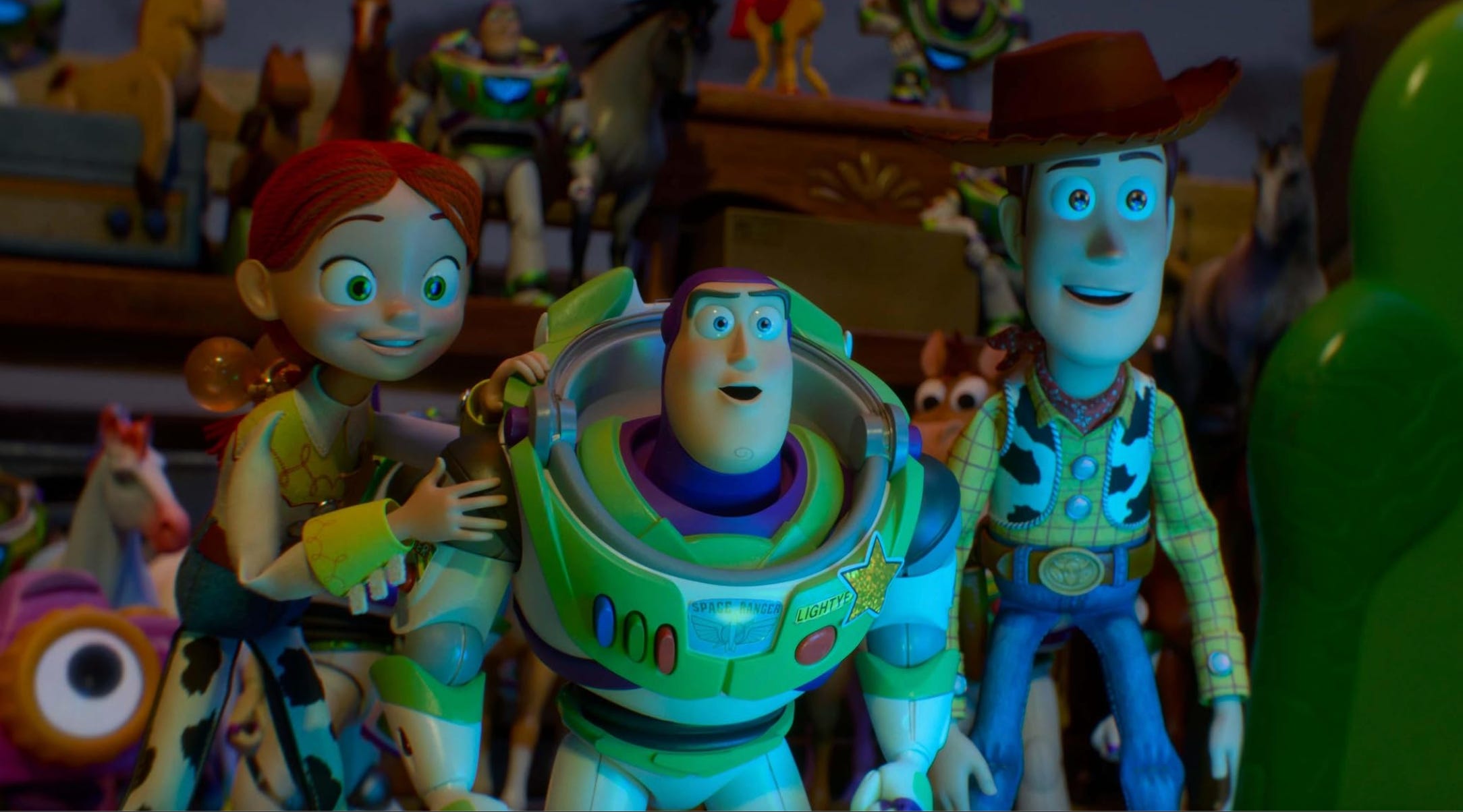
I initially wrote this piece last week, but decided it made a little more sense to publish it after I put up this analysis on the series’ shifts in animation. The article below is a broader review of the Toy Story 5.
The name Toy Story 5 alone can’t help but breed a certain cynicism. It’s rare for a franchise to retain its essence as sequels begin to mount. Each successive entry tends to feel more soulless and profit-driven than the ones that predate it. But Toy Story has continually proven an exception to that trend.
Few film series have so elegantly mirrored my own personal evolution, and it likely explains much of my enduring love for the saga. Released just a year before I was born, Toy Story was practically destined to define my youth. The 1999 sequel arrived when I was only three, and in the years that followed, the two VHS tapes relentlessly traded turns in our family VCR, both played and rewound more times than I could count. My parents were happy to see their only child happy, and were sufficiently astounded by the quality of the animation on display that they were content forfeiting whatever screen real estate it required for me to run my feverish Pixar marathons.
They gifted me Woody and Buzz Lightyear action figures for Christmas and I made silly sounds as they soared through my bedroom and I narrated each of their odysseys and escapades. I fancied myself the Andy of their world: a playmate by day, and a custodian to a hidden society that came alive in my absence. I didn’t need to catch them going about their various dealings. I delighted in the knowledge of their secret inner lives, but the mental image of my toys scrambling back to where I’d placed them was precious enough for me to respect their sanctity. (On a couple of occasions, I may have flicked off my light switch and pretended to sneak away in order to spur my plastic sidekicks into action, but alas, the sentient figurines were perspicacious enough to see right through my little ruse.)
By the time the third installment came out, I was a brooding adolescent, closed off from the wonder that the talking toys used to impart. Watching the movie in at a local cinema, I was too preoccupied by the angst in my first romantic relationship to lose myself in the story. I felt as though my world in seventh grade was far too serious for me to entertain the plights of these talking toys. In a way, it’s perfectly apt that the story where Andy grows too old for toys came out at the same time that I set aside my own love of action figures, and likewise, became disenchanted by the stories of talking playthings that had once enlivened my childhood.
(I’m happy to report that, in the years since its release, I’ve finally developed a love for the tenderhearted conclusion to Andy’s trilogy.)
By the time Toy Story 4 was released, I’d graduated high school, gone away to college, voted in my first election, and was fast approaching my first pandemic. By then, another Toy Story struck me as more far-fetched than the notion of a Finding Dory’s Granddaughter (2037). But once I sat down in the theater with popcorn in hand, it managed to capture my heart every bit as much as the previous iterations. Having shed my final traces of adolescence, I felt emboldened to shamelessly enjoy kids movies once again.
Going in, I knew nothing about Toy Story 5 apart from the fact that it was set to take on the issue of technology and screen addiction — and that it was allegedly tailed by a new Taylor Swift song. Even after loving the first four Toy Story movies and seeing the positive reviews of this new installment begin rolling in, I couldn’t help but fear that a fifth entry was simply a bridge too far for the beloved franchise to cross without brokering a deal with the devil.
I was also concerned that the movie’s handling of tech would feel preachy and contrived. The number of shows, films, and documentaries that have taken on the topic has grown so copious that most new portrayals of screen addiction in media have begun to feel trite. I wish the issue didn’t feel so annoyingly overdone, because there’s likely no crisis that’s emerged throughout my lifetime that deserves to be taken so seriously.
Yet cellphone addiction has become so commonplace that railing against the phenomenon inevitably looks tone deaf, wide-eyed, behind the curve, or some jarring combination of the three. For Toy Story 5 to address this ubiquitous problem appropriately was all but guaranteed to be a tightrope walk, but its cast and creators handle it adeptly.
It’s neither so restrained that it feels sanitized, nor so overwrought that it stops feeling like a Toy Story movie. To handle the issue with much more nuance than it does would run the risk of setting aside the series’ core identity. It effectively drives home what these devices steal from us without being so militaristically anti-technology that it borders on political. It’s digestible enough that almost any six-year-old can grasp the moral, yet heart-rending enough in its delivery that even the most hardened Pixar veterans could likely benefit from tissues.
One subtle point that the movie drove home that I couldn’t help but laugh at was about the unique uselessness of the first wave of digital toys.
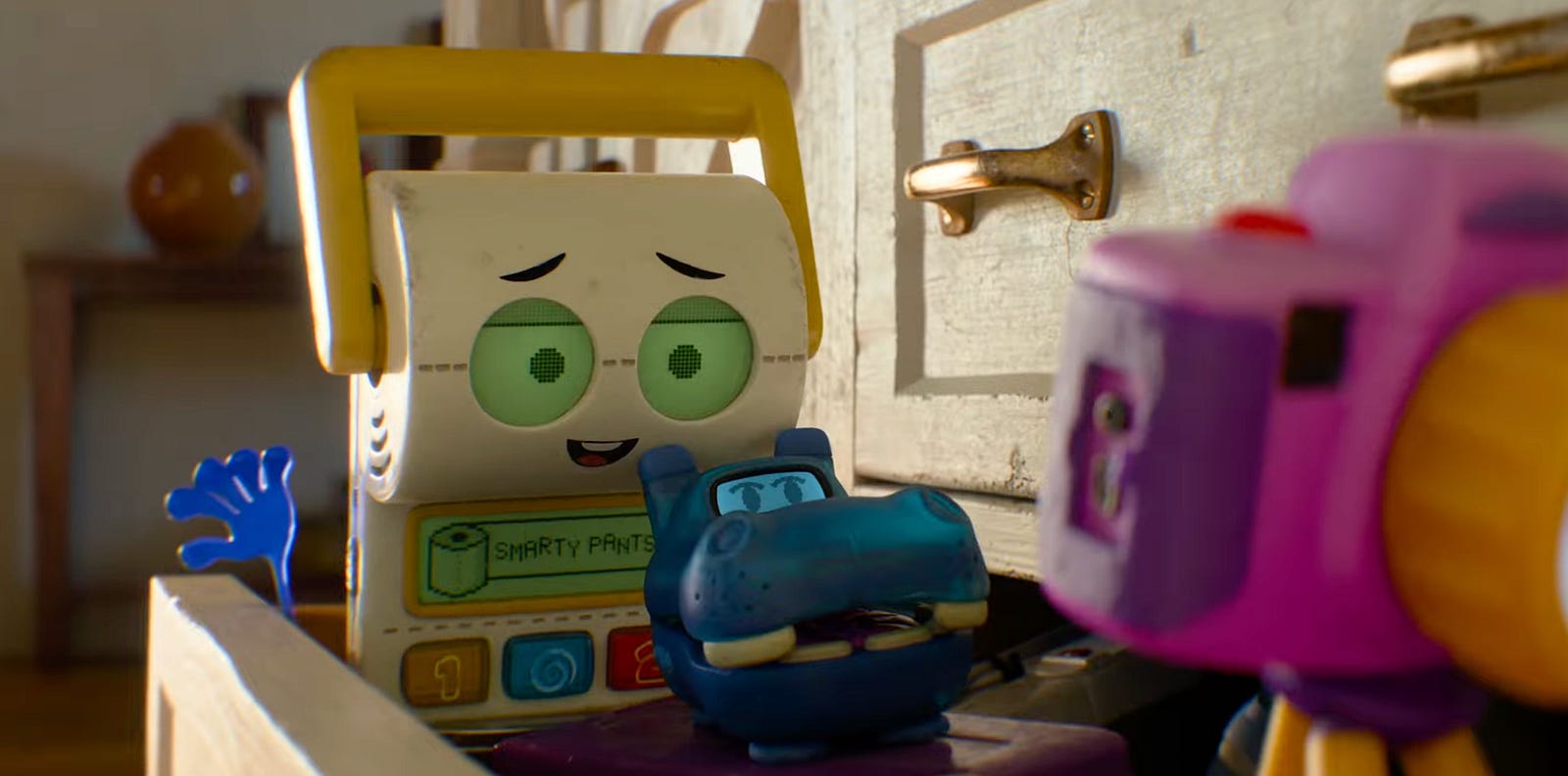
Where dolls and action figures still hold an integral spot in children’s playtime, there’s not much utility today for the mid-2000s battery-powered devices that cropped up throughout my childhood. They’ve all been replaced by newer and sleeker cousins who’ve ditched their battery compartments for USB-C ports. Watching the movie, I wondered what message it would ultimately deliver about these dated digital sidekicks that help the main gang to take on the menacing, new-age tablet. Surely no Andy or Bonnie today would occupy themselves with a potty-training tech toy from before they were born, after all. But the film finds a humorous way to keep from sidelining them completely.
Jessie’s arc from Toy Story 2 (still my favorite of the franchise) is revisited to a similarly poignant effect, but from a lens that was particularly hard-hitting for viewers like myself who’ve grown up on these stories. Another clever subplot involves a storage crate full of new Buzz Lightyears washing ashore on a deserted island, seeking out “Star Command,” employing their drone capabilities, and trying to figure out their purpose. It makes for some of the more humorous sequences in the movie, and is so detached from the main plot that director Andrew Stanton actually admitted to following Breaking Bad’s precedent in order to tie the disparate pieces together.
There’s another aspect of Toy Story 5 I wanted to address here. But as I began to, I quickly started to realize my thoughts would take long enough to fully unpack that the tangent would be best saved for a separate piece. In short, there’s a shift to the animation style for certain scenes that cleverly reinvents the relationship between the kids and their toys. On its own, I think the varied approach serves as adequate justification for this new entry in the saga.
As cash-grabbingly opportunistic as it sounds right now for them to make another, I’m officially on board for a Toy Story 6. And if we’re granting septologies to the runaway mutant that is the Jurassic Park series, studios might be wise to just grant go-aheads to Toy Stories 7, 8, 9, and 10. Hell, bring on Toy Story 19: the first live-action installment. Now, in lieu of a proper conclusion, I invite you to click on the link above and revel with me in the glorious future it foretells.