
‘Toy Story 5’ Fixes a Series Flaw That I Never Noticed
Over 30 years after the saga began, Toy Story reinvents what it means to play

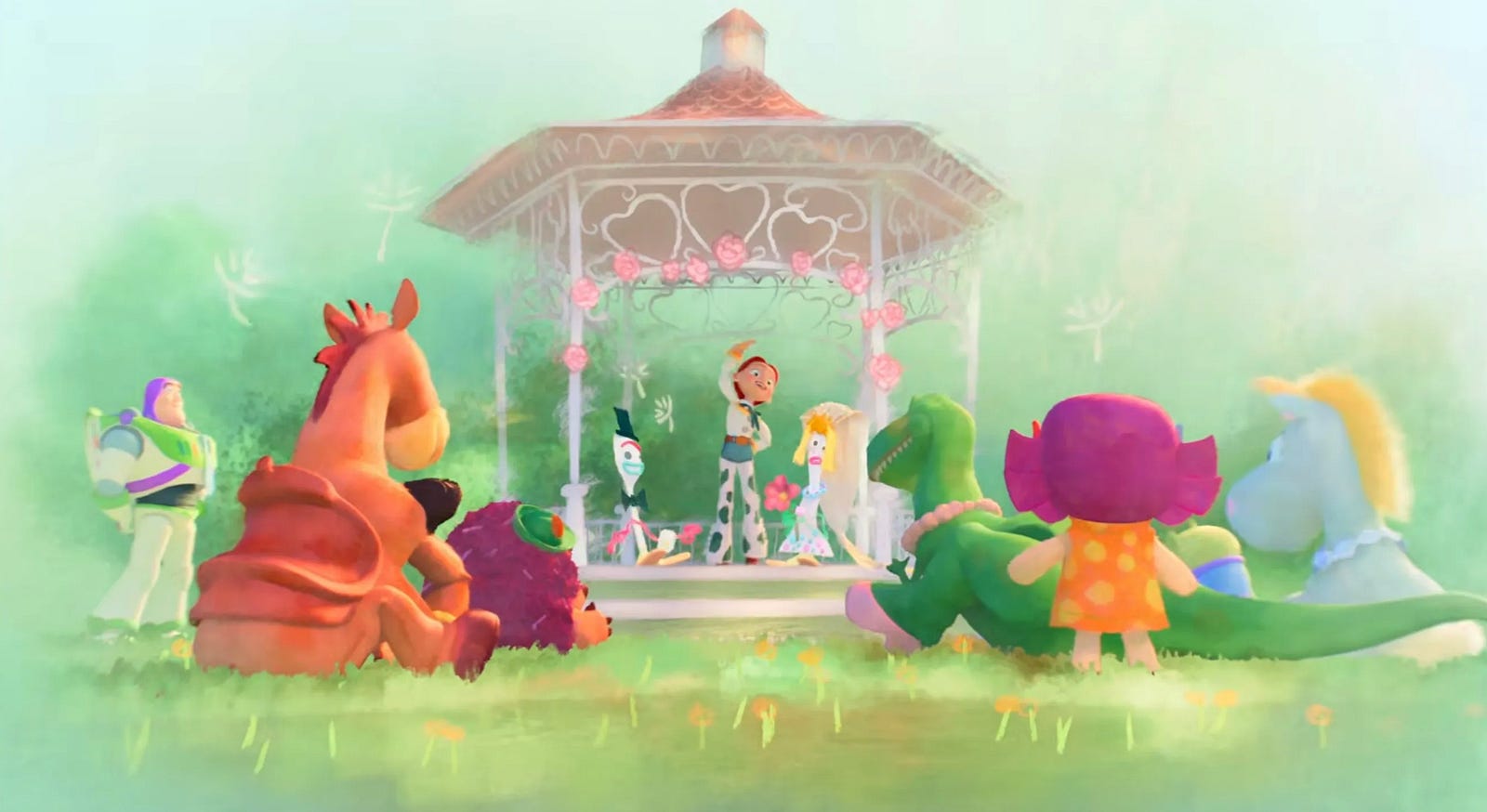
Going into Toy Story 5, I’d be lying if I said I didn’t have some reservations. Despite the few glowing reviews that I read beforehand, I couldn’t shake the feeling that this would finally be the Toy Story to cross the threshold and devolve into just another soulless, Hollywood-style cash grab.
One thing I didn’t expect was that Toy Story 5 would be arguably the most inventive entry in the franchise since the original. Nor did I expect it to reveal a blind spot that I’d had toward one of the series’ only pitfalls.
Toy Story 5 profoundly reimagines the way that scenes between toys and humans unfold. Not only has the art style continued to improve incrementally with each new installment, but there’s a brilliant emotional shift in the way that playtime is illustrated.
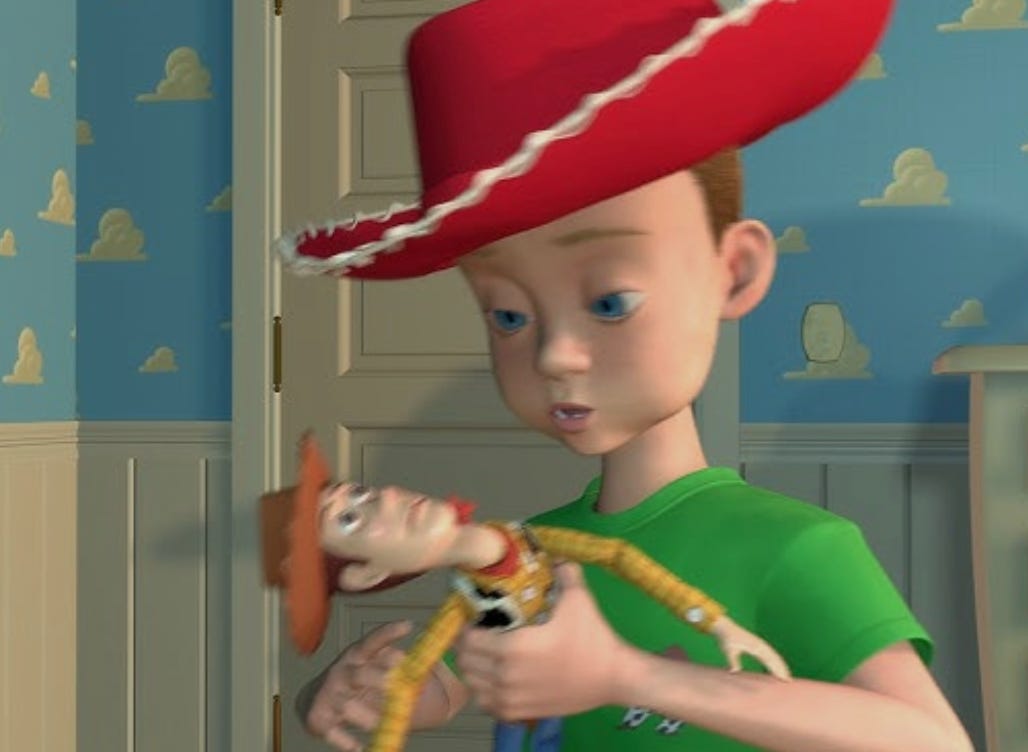
In the first four Toy Stories, the toys we know to have elaborate inner worlds are forced to play dead each time children (or adults) enter the room. As a result, there’s an undeniable stiffness to the time with their owners that the toys repeatedly describe as most meaningful. Kids pick up the lilliputian protagonists and swing them around the room as their limbs go limp and eyes become lifeless. Woody reverts to the rag doll that he is.
I hate to make this point because these animated movies have meant so much throughout my life, and I have no plans to stop enjoying them. But if I’m already smearing beloved classics like Rocky, I suppose it’s only par for the course to fire off a few shots at the Toy Story franchise.
In scenes like the one above, the toys don’t present as either consenting or particularly enjoying themselves. At best, what they do seems like a labor of love. The majority of the time they’re in use, it’s hard to imagine they’re comfortable. As a result, there’s something that registers as mildly violating about these moments.
It’s likely reading too much into the situation, as I certainly never had a toy verbally consent to playtime in all of my childhood. But if the series is going to spend so much time characterizing and humanizing these toys, it’s bound to feel a little unsettling when they’re forced to suppress all of their traits and personalities by functional giants. I was never haunted by these scenes as a kid. But nor did I ever particularly enjoy them.
Toy Story 3 seems to begin grappling with this problem by introducing a gentler, more mature Andy. And when he donates his toys to Bonnie, she’s presented from the very start as kinder and more sympathetic toward the tiny protagonists. The enhancements in animation accompanying Toy Story 4 also aid in drawing humanity from the characters even as they’re frozen in position.
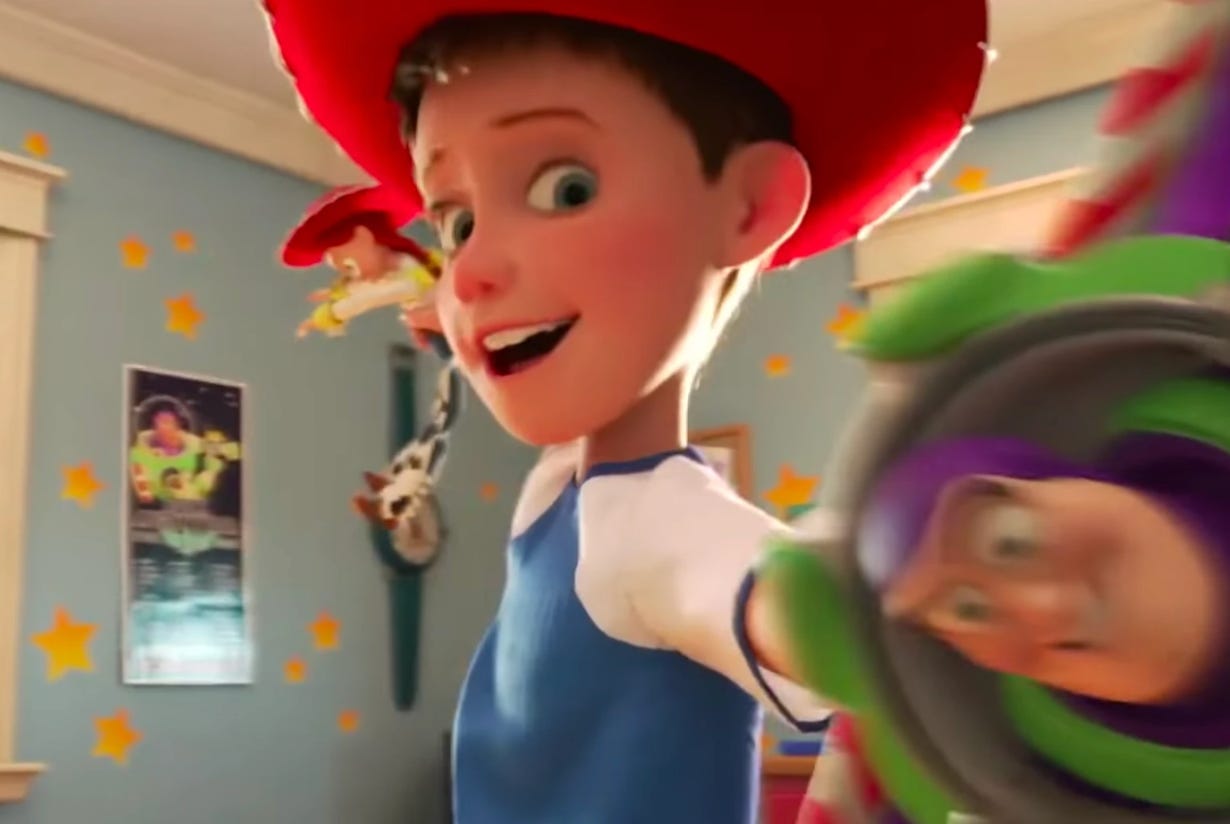
But Toy Story 5 feels like the distinct culmination of the series’ efforts to cast these relationships in a more loving and mutually fulfilling light.
In a franchise where winsome children serve as the gravitational center, it feels like a significant error in storytelling that none of the scenes that stick out in my mind from the first few movies actually involve the kids playing with their toys. I think the primary reason they haven’t lingered is that something is a little off about them. The rest of the stories are just so brimming with warmth and whimsy that this tiny creative oversight is easily ignored. What the broader saga achieves is so ingeniously novel that it reshaped the world of animation moving forward.
Yet these scenes almost uniformly fail to depict the wonder of play, and the personality that children so effortlessly breathe into lifeless objects. In Toy Story 5, playtime is finally portrayed as every bit as alive as it should be. Toys are swept into whatever off-the-wall scenarios that kids have concocted for them as the animation becomes abstract. They come to life in the presence of their owners rather than playing dead. It’s these zany, theatrical sequences they’re pulled into that gives their existence purpose. The characters can remain characters rather than reverting to inanimate props.
There was a stiltedness to the series’ prior approach that I never identified as a kid. The toys love their owners, and yet, they have to conceal all that they are inside in order to spend time with them. The fix that this latest adaptation applies feels like a revelation. It’s as artful as it is overdue, and it achieves a best-of-both-worlds effect where the toys still need to sneak around and conceal the fact that they’re conscious (these scenes are some of the very most fun in the franchise), but are granted the opportunity to actually inhabit the parts their humans assign them.
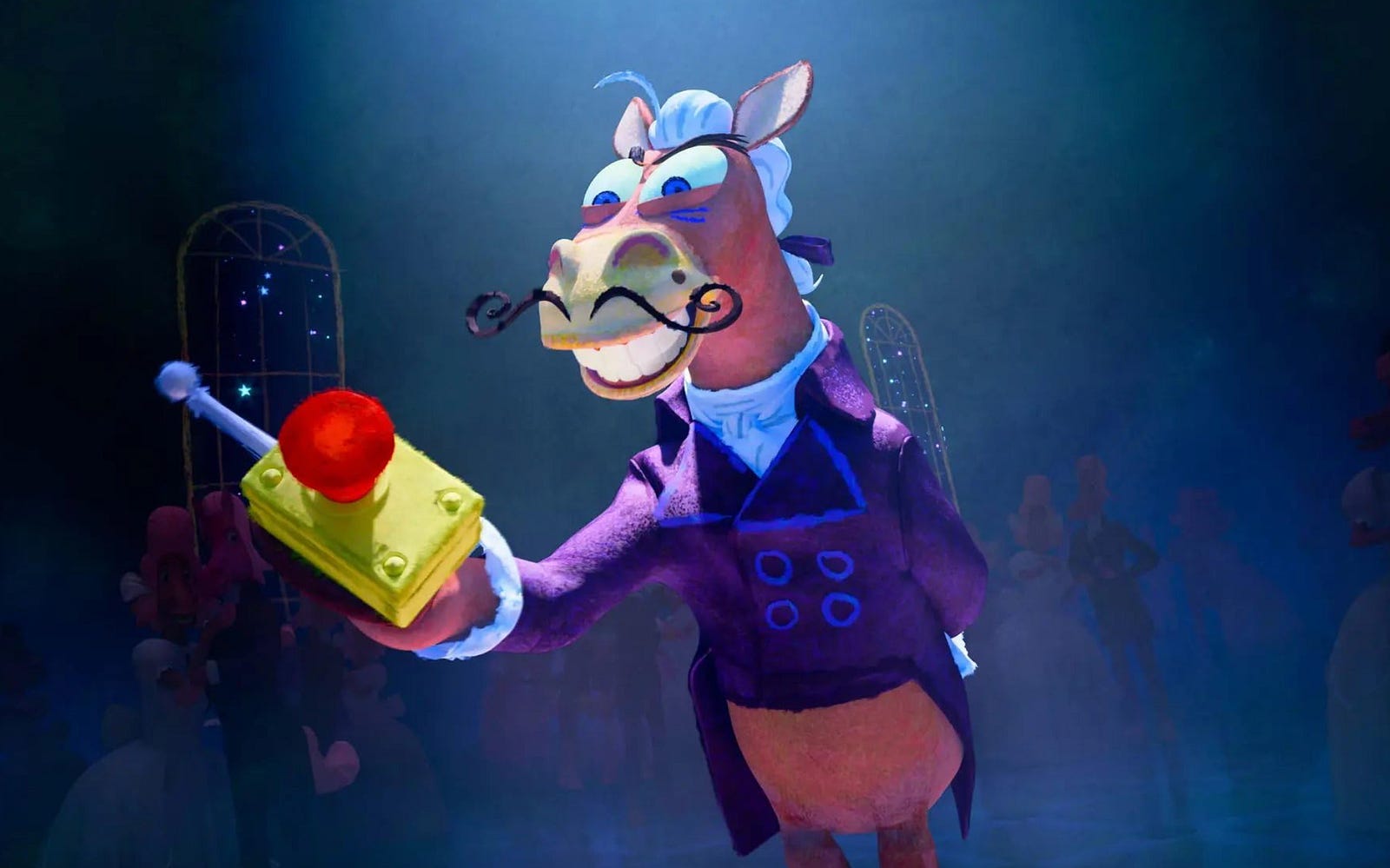
If the child envisions some off-the-wall scene with a cowgirl and her conniving horse, it feels more natural for the cast to join in that narrative and remain active participants in the world rather than be manhandled and contorted into position however a kindergartener sees fit. The cartoonish animation style employed for these scenes is a welcome change of pace in a franchise that’s grown so photorealistic that it leaves little room for improvement. It also effectively draws borders between the secret life of toys that audiences see and the joyous fantasy lives the characters are whisked away into whenever playtime begins.
It reminds me of one of Rugrats’ most defining features: we not only get to see a room or situation from adults’ perspective, but whatever the disobedient toddlers inflate it into. Trips to retrieve toys turn into intergalactic odysseys, backyards become sprawling jungles, and innocent misunderstandings serve as launching pads into adventure. As with Rugrats, Toy Story 5 doesn’t just show what an adult would see if they walked into the room on their child playing, but shows us the fantastical worlds that kids see in their minds’ eye. It feels like a great kindness toward a new generation of viewers to take their imagination so seriously.
In addition to the visual stiffness in the series’ prior approach, there was also a subtle cynicism in treating something as ethereal as playtime so concretely. In retrospect, it seems obvious that this more enchanted, stylized approach would have better driven home the wonder in these make-believe friendships that the series always aimed to impart.
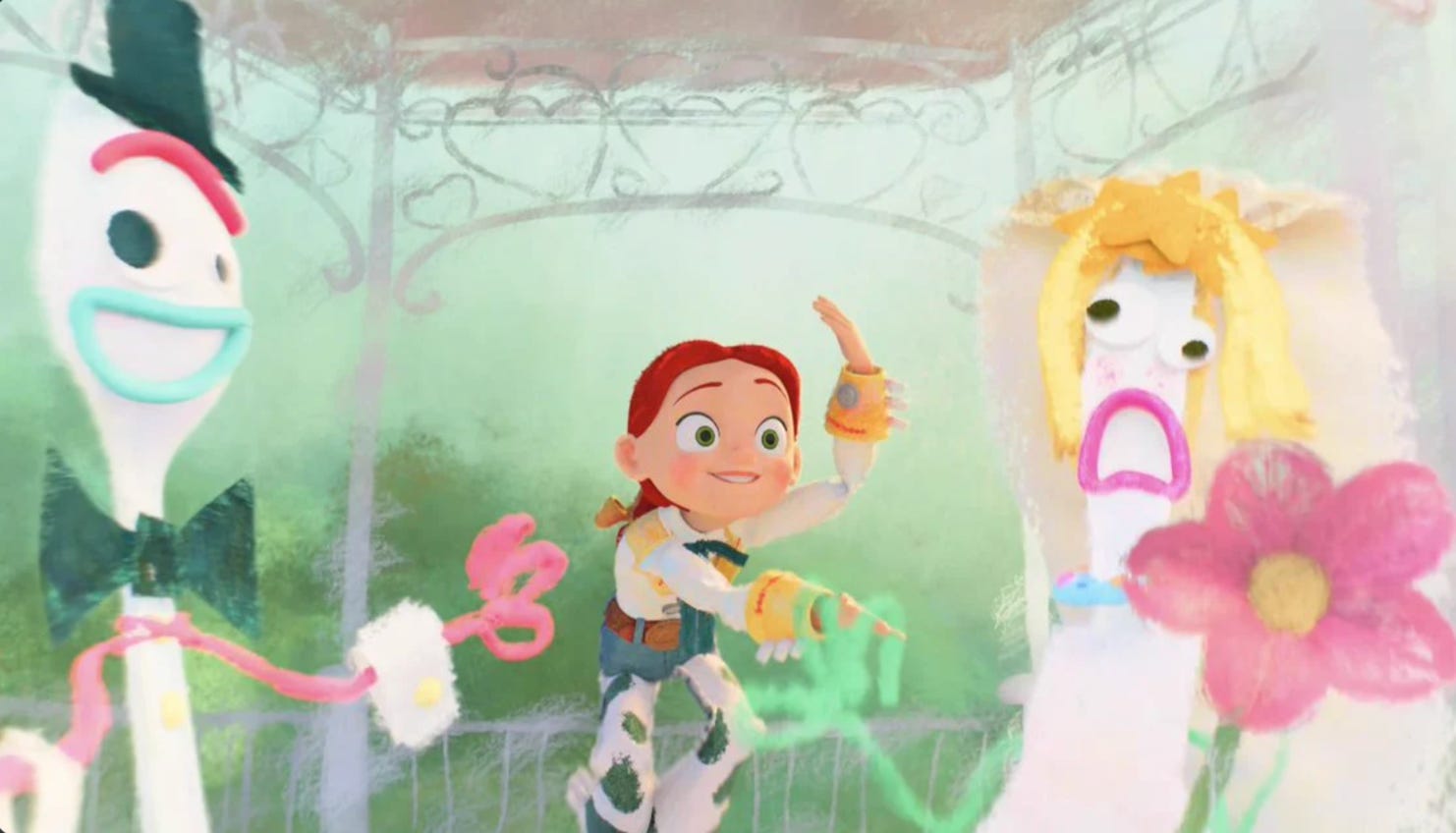
I would argue that this evolved approach warrants this new chapter in the Toy Story saga more than anything else. It provides more to the franchise than its handling of tech addiction, the main theme of this new entry, and I expect it will be a roadmap for its visual direction moving forward. While it’s hardly tainted my impression of the earlier movies, this revelation feels so overdue that I can’t help but wonder why it didn’t cross my mind sooner.
I wasn't going to Toy Story 5 because I'm boycotting Pixar due to their stripping of LGBTQ content from other movies. I also feel franchise fatigued, but its good to know that T5 was not just a cash grab