
Venezuela, ICE, and How Renee Good Became the New Gabby Petito
A brief reflection on current events

I often find it difficult to address politics when my stance on a given topic is little more than, “Well, this is bad.” And the past year has been a steady stream of dismal developments. Trump’s cabinet members are bad, and his policy is bad, and the public statements he makes serve as napalm on a raging fire. The way he treats reporters is bad, and his disdain for democracy is bad, and his flagrant violations of the law are unlike anything we’ve ever seen from a US president. Oftentimes, the in-your-face negativity of it all makes it hard to say anything apart from the most blatantly obvious.
But I try my best to remember that it’s by design I feel so crippled in my capacity to contribute anything new. When the zone is flooded, it’s only natural to feel impotent.
Sometimes I fail to address a topic at all before the controversy is buried by an inevitable stream of twenty more. And sometimes I need to take a week or month to sit with a development before exploring my thoughts on it. In the aftermath of Trump’s actions in Venezuela, the general sentiment I’ve heard from my side of the aisle is that Trump’s actions are reckless. It’s certainly hard to offer any excuses for America plundering another defenseless country for oil.
Yet given what Maduro’s rule looked like, and how many Venezuelans have rightfully celebrated his removal from power, I can’t help but pick up a bit of ignorance and insensitivity in many Democrats’ reactionary response to South America’s current political respite. Some seem to have a hard time grappling with the notion that, like Trump, Maduro was someone who ruled his country with an iron fist. He refused to accept the results of an election once it became clear that he lost and would need to abdicate his seat. He was responsible for mass death and immigration. And there’s a certain apathy in the masses of Democrats who are struggling to fully acknowledge the relief so many Venezuelan’s feel in the wake of Maduro’s capture.
For plenty of Democrats, it’s not difficult to separate Maduro’s tyrannical regime from the thoughtless, undiplomatic way that Trump decapitated it. But in some, I’ve detected something almost akin to sympathy toward Maduro. Some seem to believe that to be Trump’s enemy makes Maduro their friend. And in the Republicans who are returning to their tired “Trump Derangement Syndrome!” cries, I can’t help but see a small kernel of truth.
It may be controversial to admit, but I believe that Trump Derangement Syndrome exists. Yet it’s critical to acknowledge the equal and opposite form that it takes. Those who suffer from Trump Obsession Syndrome go through life believing in their heart of hearts that there’s nothing their dear leader can do wrong. They could see the country crumble into post-apocalyptic tatters and still rant and rave about how the radical left is to blame.
And then there are those who are so consumed by fear and anger that they believe a broken clock is never right. I can’t totally fault them for the idea. People are justified right now in their indignation. I’m thankful to be insulated enough from the fallout of Trump’s leadership that I still feel safe expressing my most honest thoughts about it.
It’s tough for me to refer to someone with such a copiously documented history of dishonesty and malfeasance as though there’s any merit to his rule. It’s rare for me to be able to find those silver linings. And yet, I hate to be one of the Democrats who’s unable to acknowledge that Operation Warp Speed — however silly its name — saved lives by producing a vaccine before the rest of the world managed to. I’d hate to deny that, even if it was motivated entirely by his own selfish pursuit of glory, that Israel and Gaza are in a better state today because of Trump’s actions, or that, in all likelihood, the future of Venezuela will be brighter without Maduro in it. I can’t dismiss the Venezuelans who look toward Trump right now and see a savior; they’re more entitled to the belief than I am. Removed from life there, it’s easy for Americans to dismiss the relief that much of Venezuela feels in seeing their illegitimate leader gone.
On one hand, when I see the damage that Trump’s administration has wrought in America in the year since he’s taken office, I can’t help but feel that it reduces the gravity of the situation to simply liken him to a broken clock that’s occasionally correct. When lives are on the line, citizens are being deprived of rights, the media is under attack, and healthcare costs are soaring because of greed and craven political games, it often feels irrelevant to acknowledge those rare nuggets of good that come from his leadership.
But it shouldn’t be impossible to address in the same breath that Maduro had blood on his hands and deserved to be removed from power, and also that plundering his country for oil is bad and may well open the door to a more dangerous, more lawless, more war-torn world. Trump could have handled the move far more judiciously.
I also think it’s useful in this instance to consider the parallels between Trump’s actions in Venezuela and those of so many prior US presidents. The similarities don’t justify our new foreign affair-meddling campaign. But they do frame Trump’s behavior as far more precedented — even typical of our prior leaders — than so much of what we’ve seen from him during his time in politics. The truth is that I can’t help but see echoes of Obama’s actions against Bin Laden in Trump’s Congress approval-free attack on Venezuela.
If the tables were turned, and it were Obama or Biden who’d done in South America what Trump just did, it’s not hard for me to envision the media I consume painting the incident in a more favorable light. Democrats would have an easer time looking at Maduro for his human rights violations and calling his removal justified had it been a leader on their side of the aisle who’d conducted matters comparably. And yet, it remains a reach to imagine this scenario coming to pass under any modern Democratic leader.
What most distinguishes Trump’s approach is its sheer brazenness. It lends credence to the notion that “Trump is transparent” at the same time that it toxifies our country’s standing on an international stage. The optics could hardly be more horrendous. The action also appears to represent one of the rare position reversals that are too enormous for much of his base to tolerate.
Another “broken clock is right twice a day” moment happened during Trump’s campaign for office in 2016 when he challenged the war hawkishness that had defined the Republican party for decades, openly calling our wars in the Middle East a mistake. It was a message that spoke to his constituents almost as much as his alleged crusade against the world’s pedophiles. Now that it’s been revealed Trump’s name is scattered all throughout the Epstein files and he had far closer relations to the disgraced child predator than previously believed, betraying yet another core campaign promise has only worsened the tension and disunion within the Republican party.
Ironically, I’m actually grateful for the bald-faced and opportunistic approach that Trump has taken to this military intervention. It removes any plausible deniability that Trump and his base may have had. When so many prior presidents have kept the insidious intentions behind their military conquests closely guarded, Trump is wearing his motivations proudly on his sleeve. Even as his handlers have presented alternative narratives or attempted to whitewash Trump’s candor on the subject, the president has continued on full speed ahead stating not only that we’re going to take their oil and sell it for profit, but that he himself is the acting President of Venezuela.
Making matters worse are the mounting controversies with ICE. Trump and his administration have seemingly wagered that the country would buckle upon seeing this invasion of American cities. But even before Renee Good was shot to death by an ICE agent, it didn’t seem as though that gamble was working in their favor.
America is a cultural force to be reckoned with, and Trump appears to have underestimated the power of a narrative. He was able to twist it in his favor when he was out of office, but now that he’s returned to power, he’s at the mercy of a public who don’t see their lives improving in the sweeping ways that he promised. They’re unhappy with the price of goods, have yet to reap any benefits from Trump’s tariffs, and are flooded with videos on social media of armed ICE agents violating the rights and dignity of citizens and non-citizens alike. Entire schools and business have been shuttered in order to keep citizens safe from Trump’s unchecked police force.
Even while I’m thankful for the reckoning that’s stemming from Renee Good’s tragic demise, and what it means for this administration moving forward, in her story’s virality I can’t help but see a symptom of an even older systemic problem. There’s a privilege in her martyrdom that minorities killed and brutalized by the police have rarely experienced. It’s because she’s a white woman that the story has the resonance and staying power that it does. It’s because, going off of her complexion alone, she looks to be a part of Trump’s America. It’s also as damning as it is telling just how rapidly this isolated murder has diverted our conversation away from the nation whose autocratic leader we just absconded with, and the hundred Venezuelans who were killed in that hectic process.
The primary reason that George Floyd became such a household name was that his death was so flagrantly unjustified. Anyone who saw the footage could see a man pleading for his life. But had the circumstances been a little hazier, his death would have blended into the background cacophony of police brutality to which we’ve grown so scabrously accustomed. His identity would never have been known. He would have been just another nameless black man killed by the police.
Unlike in the cases of George Floyd, Philando Castille, or Sandra Bland, it saddens me to say that a shadow of a doubt exists as to what took place with Renee Good’s death. I don’t rule out the possibility that the ICE agent delighted what happened to her; it would be in keeping with many of the other Nazi tattoo-clad contractors that this administration has negligently employed. But the footage of what happened opens the door to some real uncertainty. If it didn’t, people wouldn’t be able to watch it and arrive at such diametrically polar conclusions about what took place. Perhaps some of that contention stems from the way our very sense of shared reality has warped in the years since Trump entered our politics. Yet I’ve felt myself grow a little frustrated throughout the past couple of weeks with all of those who seem incapable of even briefly entertaining the opposite perspective.
If this case makes it to court, I’d be shocked if it proved as cut and dry as most seem to believe. Both the defense and prosecution will likely be able to present compelling cases. Reaching a unanimous verdict will be no simple undertaking for jurors. Republicans see self-defense and Democrats see cold-blooded murder. Republicans see a disruptor and her wife attempting to flee in defiance of orders, and Democrats see an innocent mom doing her best to drive around the ICE agent obstructing her way out.
The incident largely became a political flashpoint and hotbed for division because of the victim’s ethnicity. Above all else, it’s her whiteness that makes the case resonate in a way that similarly cloudy use-of-force deaths often don’t. When analogous incidents involve people of color, they get painted over, purposefully suppressed, or legitimized. It required a white woman’s death for the ICE issue to reach this current fever pitch.
Had a black man got in his car and fled the scene in that scenario, few of us would be surprised by this same result coming to pass. It wouldn’t have sent those same shockwaves through white America. It wouldn’t have affected those voters who are pro-minority on paper, but call the police on innocent birdwatchers in Central Park.
Had it been an immigrant who inched his vehicle forward as an ICE officer stood within a few feet, most would anticipate gunfire. But because the victim is a white, Middle American woman, the story has pierced our collective conscience in a way I don’t believe it otherwise would have.
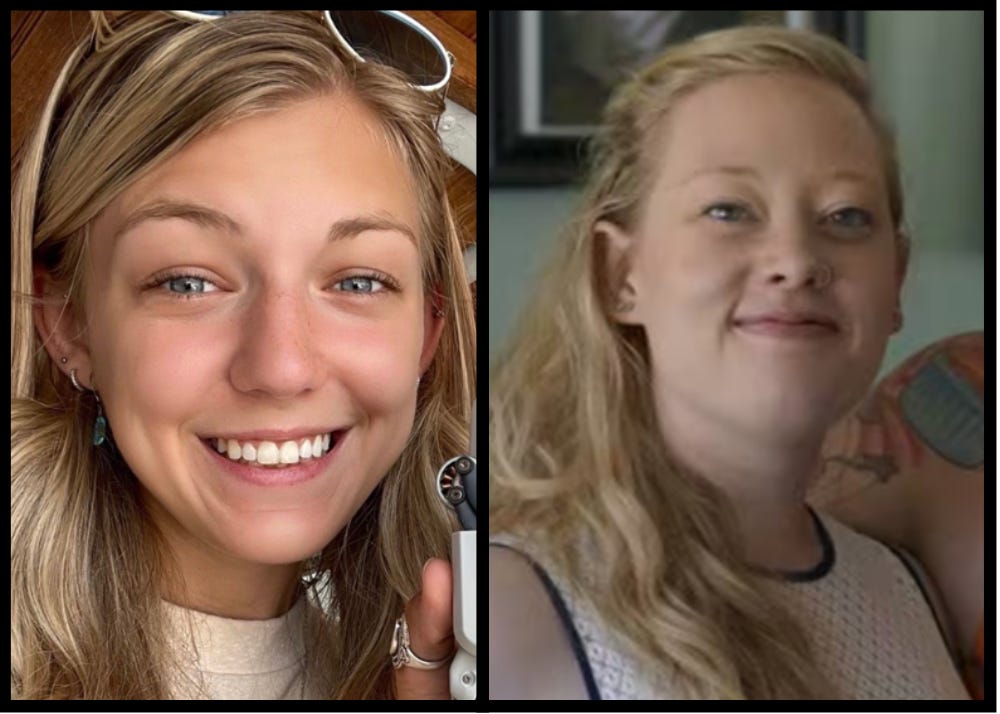
Renee Good’s Caucasian face has dominated this story about ICE’s brutalization of immigrant communities in the same way that the murder of Gabby Petito became a stand-in for the far-more-copious number of minorities who are killed and go unaccounted for each year. Going missing a year into the pandemic, her story dominated headlines for weeks, becoming the subject of no less than five separate documentaries. Exalted by our “Missing white woman syndrome,” her disappearance quickly became a symbol for missing people everywhere and distorted the reality of which demographics are most vulnerable.
Similarly, the world latched onto the sunken Titan submersible and its handful of affluent passengers, ignoring the far more fatal marine disasters that happened across the globe during that same month. The futile search efforts even siphoned resources away from others who could have used it.
I’m thankful that the ICE issue has come to the forefront with a renewed intensity, and that the backlash only seems to be building. But I can’t help but feel we’re having the right conversation for the wrong reason.
It isn’t the Renee Goods that are most jeopardized by this administration. Statistically, they’re among the safest. It’s much of why Good’s murder is such a shock to the nation. It’s the minorities who are most at risk of being dragged from their homes, brutalized, and imprisoned en masse. Maybe it’s important that Good’s death put a spotlight on their plight. But it’s hard to ignore that our country only seems to stutter when its violence touches someone it was never intended to, or that another issue has been co-opted from those most deeply affected by it.
It’s hard not to see another symptom of our national ills in the way we’ve collectively hailed Renee Good as the grand symbol of ICE’s militaristic overreach.
I always read your post with interest, but I disagree completely. If Trump did anything of value it was purely accidental.
Trump removed Maduro for the same reason Bush/Cheney removed Sadam Husain. Oil&personal gain.
I understand the idea that perhaps white women victims get more attention, but the idea ice belongs in Minnesota for any reason is flawed. I wish in everyone’s next life they live as a mother just trying to get their kids to school. If I had been up since dawn getting myself&my kids dressed, fed, very possibly on my way to work I would have been angry&confused by the actions of this thug.
I want the best&brightest, I don’t want a functionally illiterate, rapist&thief in the White House. You might have a point if Trump hadn’t absconded with the oil, deposited the money in Qatar in a personal account.
I don’t think I’m deranged in wanting the Epstein files released, I want ICE defunded.
President Obama could possibly be questioned about Al Awaki, but not bin Laden.
That Trump is a racist, sexual predator&uses US military to exact revenge&financial gain, his disruptions of U.S. economy& world alliances is not in dispute. I’m not deranged to think his acts are criminal.
BTW just because I’m a white woman doesn’t mean it’s ok to shoot me in the face.
I am guilty of being one of those with Trump Derangement Syndrome who are "so consumed by fear and anger that they believe a broken clock is never right". I despise Trump with such intensity that I do not wish to give him credit for ONE SINGLE THING!!! Also, with all due respect Ben, I see no "two sides" to what happened to Renee Good. She was needlessly shot and killed by an angry and vengeful thug who should never have been hired by ICE nor given a gun.